

Why We Don't Start With Code
Gravity Innovations
The hardest part is understanding the problem well enough that the right solution becomes obvious.
When a client first approaches us, they usually have a goal in mind, whether it's increasing sales, saving time, automating repetitive work, or creating a better experience for their customers. What they often don't have is a complete technical solution, and that's perfectly normal. Our job is to help uncover it.

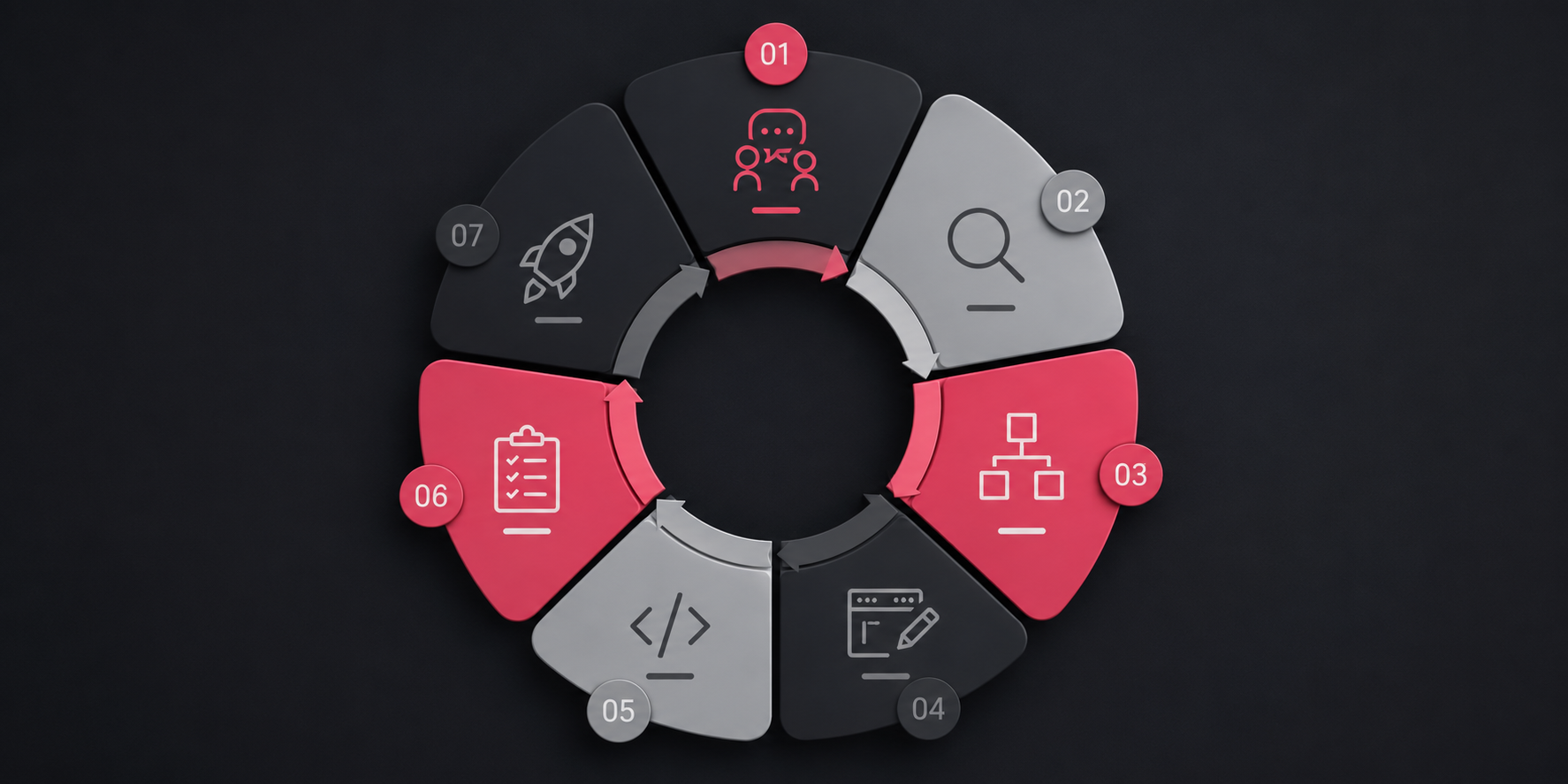
Before discussing technologies or features, we focus on learning how your business works.
We ask questions about your processes, your customers, your team, your challenges, and your long-term goals. Every answer helps us understand not just what you want to build, but why you want to build it.
This foundation guides every decision that follows.

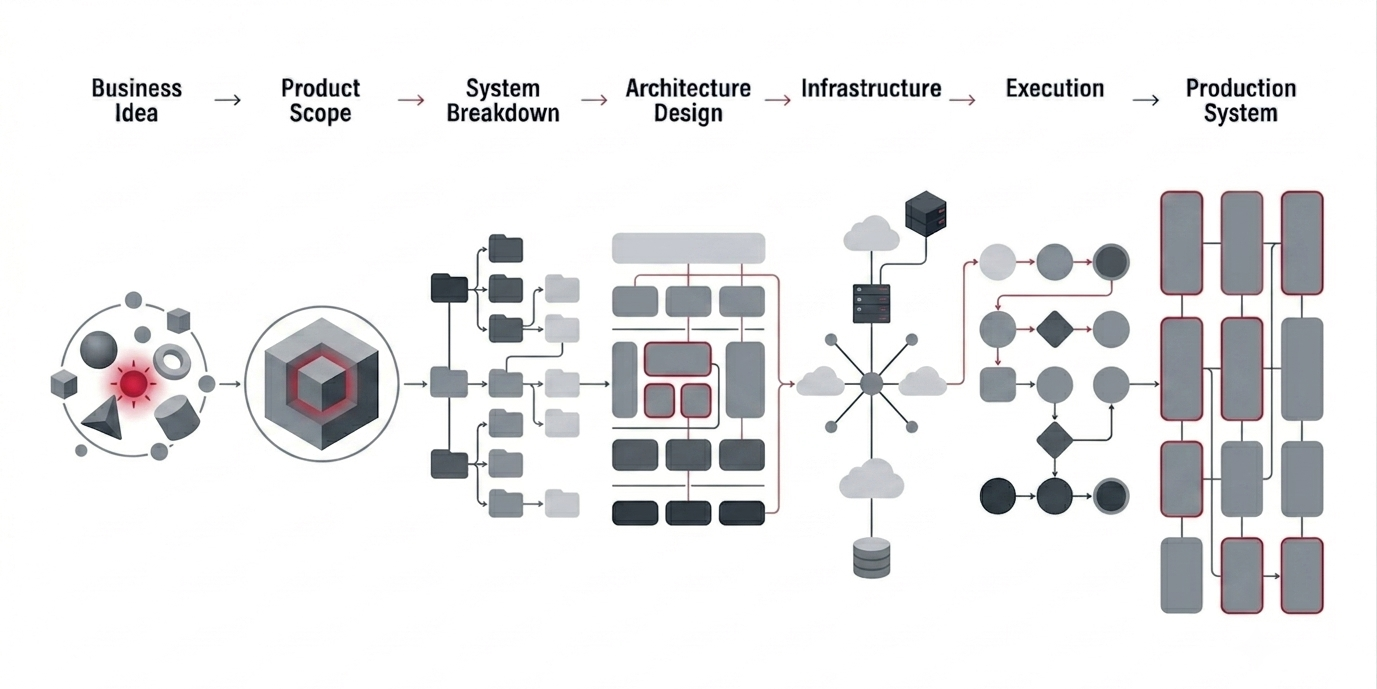
Once we understand the business, we begin planning.
This is where we define the project scope, identify priorities, document requirements, design the system architecture, and estimate timelines.
Planning isn't paperwork for the sake of paperwork. It's how we reduce uncertainty.
Changing an idea on paper takes minutes. Changing a finished system can take days or even weeks. Investing time in planning saves significant time, cost, and frustration later.

Before development begins, we design how the software will work from the user's perspective.
We map user journeys, create layouts, and simplify workflows so the system feels intuitive rather than complicated.
The goal is to solve problems before they become code.

Only after planning and design are complete do we begin development.
Rather than building everything at once, we work in manageable milestones. Each milestone is reviewed, tested, and refined, allowing us to catch issues early and ensure the project stays aligned with your goals.
Progress remains visible throughout the process.

Software should do more than simply run.
We verify that every feature works as intended, test different user scenarios, identify edge cases, and ensure the application is secure, reliable, and performs well under real-world conditions.
Quality is built into every stage-not added at the end.

Launching a product is an important milestone, but it isn't the end of the journey.
We carefully deploy the application, monitor its performance, and ensure everything operates smoothly in the live environment.
A successful launch is measured by stability, not speed.

The best software evolves over time.
As users interact with the system, new insights emerge. Real-world usage highlights opportunities to improve workflows, add valuable features, and streamline existing ones.
Great software is never truly finished-it continuously adapts alongside your busine

Take-away
It can be tempting to think that moving faster means skipping steps. After all, if the destination is a working application, why spend time asking questions, drawing diagrams, or discussing possibilities? Because every decision you make early changes hundreds of decisions you'll make later.
Think of software like constructing a building. Changing the position of a door on a blueprint takes seconds. Moving that same door after the walls are built means tearing things down, rebuilding, and checking that everything still fits together. Software works exactly the same way. The earlier a problem is discovered, the cheaper it is to solve.
Our philosophy is simple: invest time where it has the greatest impact. We don't slow projects down—we remove the uncertainty that slows them down later. The result is software that's easier to build, easier to maintain, and far more likely to solve the problem it was created for.

“The hardest single part of building a software system is deciding precisely what to build.”